Makeup for a Photoshoot: Flash vs Natural Light and What to Bring to Set
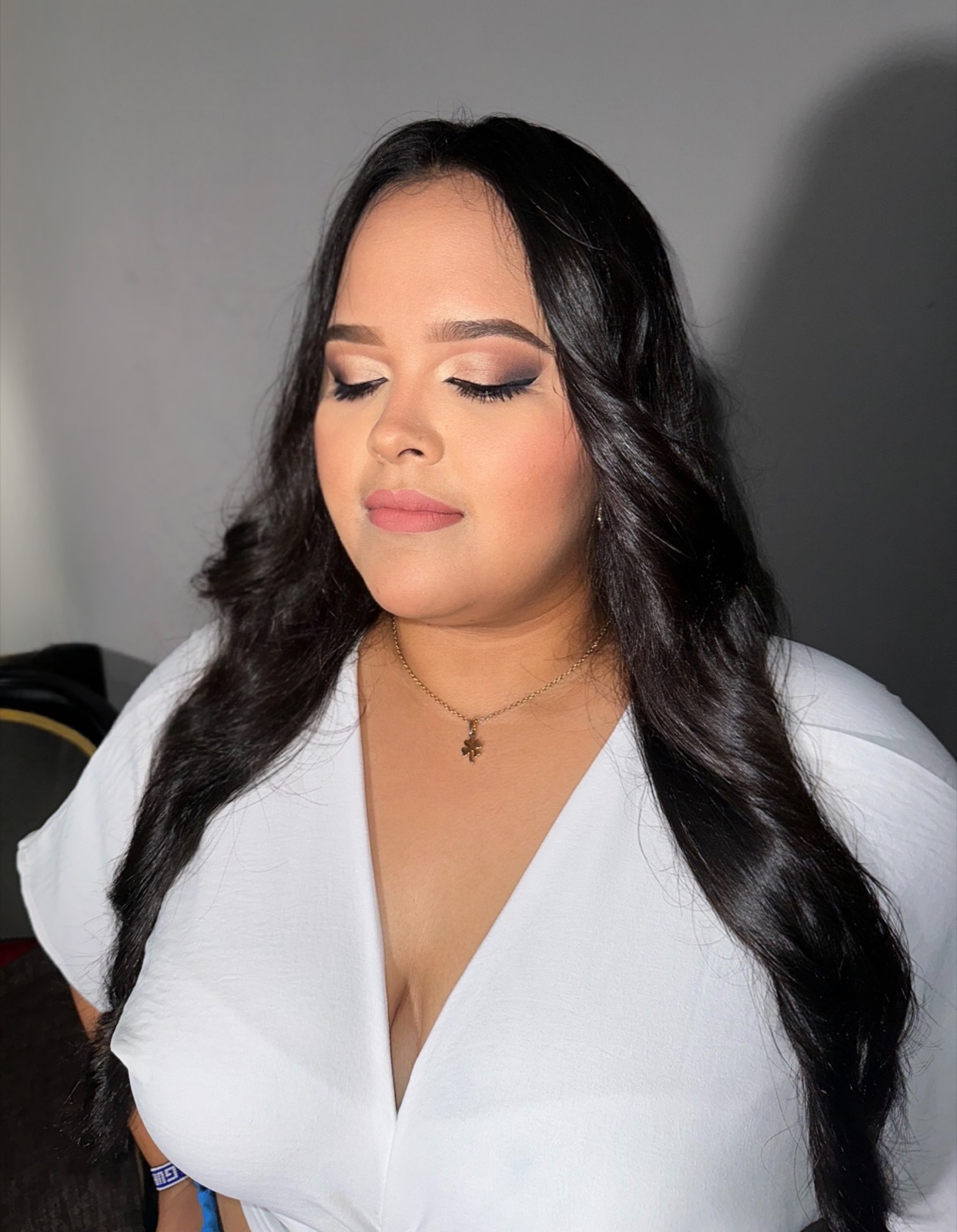
If you have ever done flawless makeup in the mirror and then looked washed out and featureless in the photos, you already know why makeup for a photoshoot is its own specialty. The camera does not see the way the human eye does: it flattens the volumes of your face, softens color and amplifies every trace of shine. I have spent years doing makeup for editorial shoots, model portfolios and personal branding sessions in Medellín, and the first thing I explain to every client is this: photography makeup is built for the lens, not for the mirror. Here is how the work changes between flash and natural light, and what you should bring to set.
Why do you look different on camera? First, because a photo turns your three-dimensional face into a flat image: the natural shadows that shape your nose, cheekbones and jawline disappear, and without well-placed contour and blush the face reads as erased. Second, because the camera softens color intensity: the lipstick that looks perfect in the mirror reads far more muted in the final shot. That is why, when I do makeup for photos, I apply blush and contour with more presence than I would ever use for a social event. In person it feels like too much; in the final image it looks exactly right.
Flash is makeup's great traitor. The infamous flashback — that ghostly white face in direct-flash photos — is caused by ingredients that bounce light back: sunscreen with mineral filters and HD powders loaded with silica. For a studio session with strobes, I skip SPF in the base, apply powder in the thinnest possible layers and stick to matte or satin finishes, never heavy highlighter all over the face. A trick I teach my clients: before leaving home, take a flash selfie in a dark room. If your T-zone or the center of your face turns white, product needs to come off before you reach the set.
Natural light is kinder, but also more honest. On an outdoor shoot in Medellín — golden hour on a rooftop in El Poblado or in a garden in Llanogrande — sunlight shows skin exactly as it is: every layer of product, every dry patch, every demarcation line on the neck. For exteriors I work with cream formulas, lightweight skin-like bases and very little powder, setting only the T-zone. The result looks fresh and alive on camera. That said, with our humidity I always bring blotting papers to set: a pretty natural glow and a sweaty face are about ten minutes apart.
Today's cameras capture skin at a resolution the naked eye will never reach, and that is where texture rules. Makeup that looks smooth in person can show emphasized pores, powder caught in facial hair and creasing around expression lines the moment someone zooms in. My defense starts before foundation: skin exfoliated and hydrated days in advance, primer only where needed, and base pressed on in thin layers with a damp sponge instead of dragged. Less product, well placed, always photographs better than full coverage. And concealer goes only where it is truly needed: nothing ages a high-definition photo faster than thick layers under the eyes.
Some details the camera rewards generously: brushed, defined brows, because they frame the face when light flattens everything else; lashes with good mascara or individual lashes, which open the eyes from any angle; and lips with a subtle liner half a shade darker than the lipstick, so they do not vanish in the frame. Choose your colors half a step more intense than you would wear in real life. What I avoid on shoots: loose glitter, which bounces light unpredictably, and trends the client has never worn before. The day of your photoshoot is not the moment to debut a new look.
What to bring to set: the exact lipstick you are wearing for touch-ups, a compact powder, blotting papers — around $15.000 at any drugstore, and they save entire sessions —, cotton swabs to fix mascara smudges, a straw so you can drink water without ruining your lips, and a button-down shirt so you can change without wrecking your hair or your base. Arrive with clean, moisturized skin and, very important, do not experiment with new products or facial treatments the week before: an irritation cannot be edited out as easily as you think. If the session runs long, water and a light snack belong in the kit too.
After so many photo sessions in Medellín, my best advice is that the makeup artist and the photographer work as a team: I always ask what kind of light they plan to use, whether there will be direct flash or diffusers, and I adjust the makeup for the photoshoot around that answer before I even open my kit. If you are preparing a portfolio, personal branding photos, a maternity session or a campaign, and you want to arrive on set with makeup designed for the camera and for our city's climate, write to me. I love staying through the whole session for touch-ups between shots: on camera, that care shows in every single frame.
Related service
Editorial & Photo Shoot Makeup in Medellín →